Case Study — My.Win

A website that knew exactly who it was talking to.

Client My.Win
Scope Strategy, structure, copy & design direction
Discipline Marketing website & positioning

My.Win

Industrial B2B SaaS
Equipment Lifecycle Platform
——
Marketing website

My.Win connects industrial equipment manufacturers with the food manufacturers who run their machines — turning one-time equipment sales into an ongoing after-sales relationship.

The platform was capable. The website wasn't telling its story. It opened with a six-module product grid that explained what the software contained, but nothing about why a buyer should care. No clear audience, no emotional hook, no single action to take.

The brief was to rebuild the site so it made the business case as sharply as the company made it in the room — and pointed every visitor toward one outcome.


The real question wasn't how the site should look. It was what the site was for.

Before any design decision, two strategic questions had to be answered — and the old site had quietly answered both of them wrong.

What is the website's job? The instinct was to sell the product directly and push visitors toward signing in. But this isn't an everyday consumer purchase. It's considered, high-value, and only makes sense once a buyer sees the features that matter to them, with the ROI attached. The site's job wasn't to convert a login. It was to earn a demo.

Who is the website for? My.Win is a two-sided platform. Food manufacturers use it; equipment manufacturers are the ones who pay. Speaking to both at once produces a message that describes the product instead of selling it — the exact weakness the old site had.


Point the site at the buyer. Make the other side their reward.
  • 01 Sell to the manufacturer who pays. The homepage speaks directly to the equipment manufacturer. The value to food manufacturers — access at the machine, AI support, one-tap part requests — is framed as what the manufacturer gives their customers. A reason to buy, not a parallel pitch.
  • 02 A win for both sides. When an equipment manufacturer offers the platform as a value-add, their customer stays engaged with the brand long after installation. The customer gets a better experience; the manufacturer keeps the relationship. The site makes that mutual benefit the core of the argument.
  • 03 One action, everywhere. No sign-up, no pricing, no free trial. Every page ends the same way: request a demo. For a considered B2B purchase, the goal is a conversation, not a self-serve click.
  • 04 Honest by design. Economic figures were framed as industry benchmarks, not claimed results. Every product claim was checked against what the platform actually does before launch. With sophisticated industrial buyers, credibility is the whole game.

Homepage

The narrative arc moves the way a strong sales conversation does — the problem, the cost of it, the reasons it happens, the solution, and the single next step. One loud moment per section; everything else supports it.

  • One focal point per section The original site had three or four competing elements per section and landed nowhere. Each section was rebuilt around a single statement the eye lands on first.
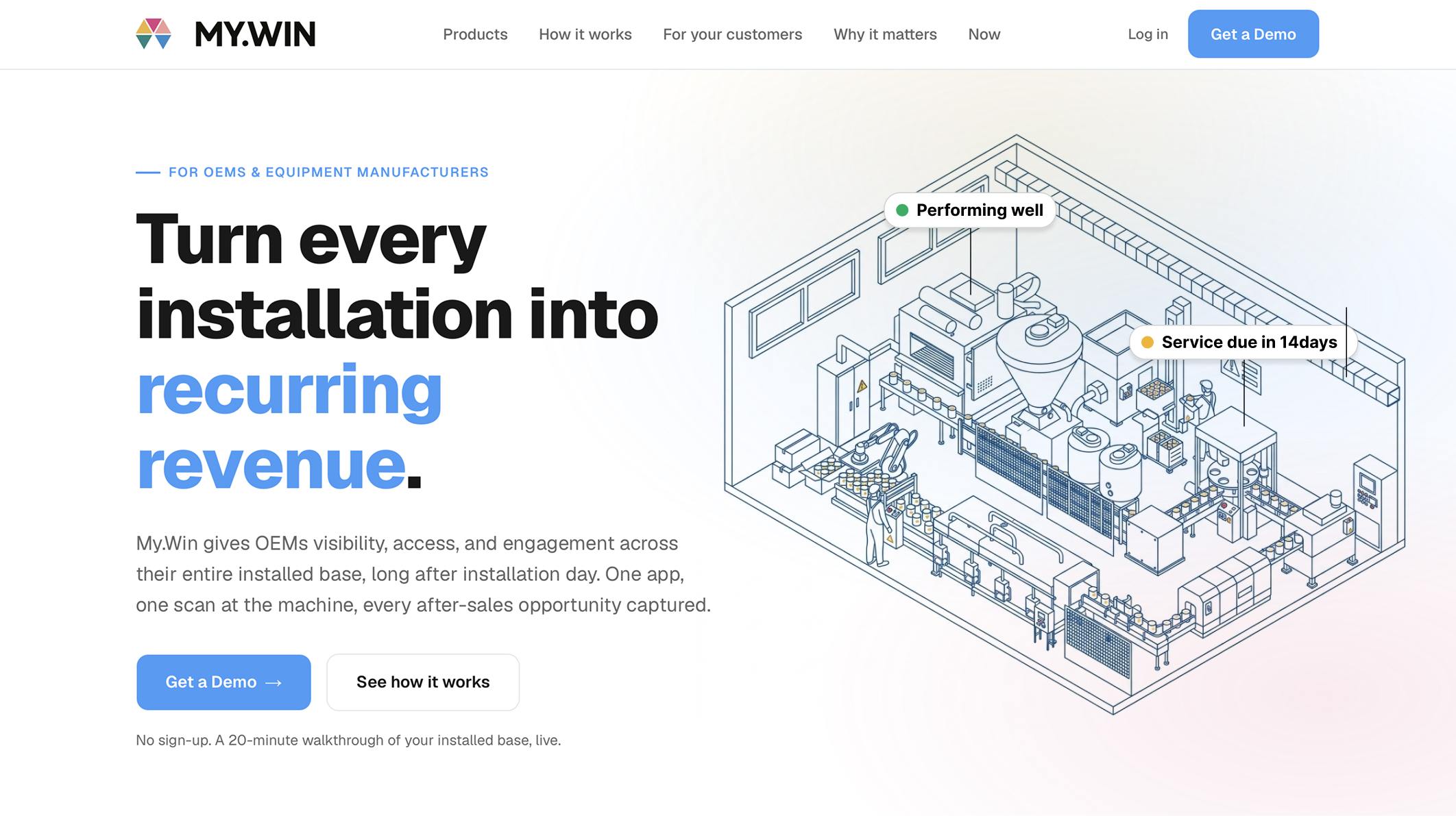
  • A concept, not a screenshot The hero shows the product idea — monitored industrial equipment with live status — rather than a generic dashboard. It communicates without needing a caption.
  • One conversion action Request a demo. The same call to action closes every page, removing the noise of competing next steps.
My.Win homepage hero — isometric industrial equipment illustration with live status badges

Homepage — the rebuilt narrative arc

The Two-Sided Story

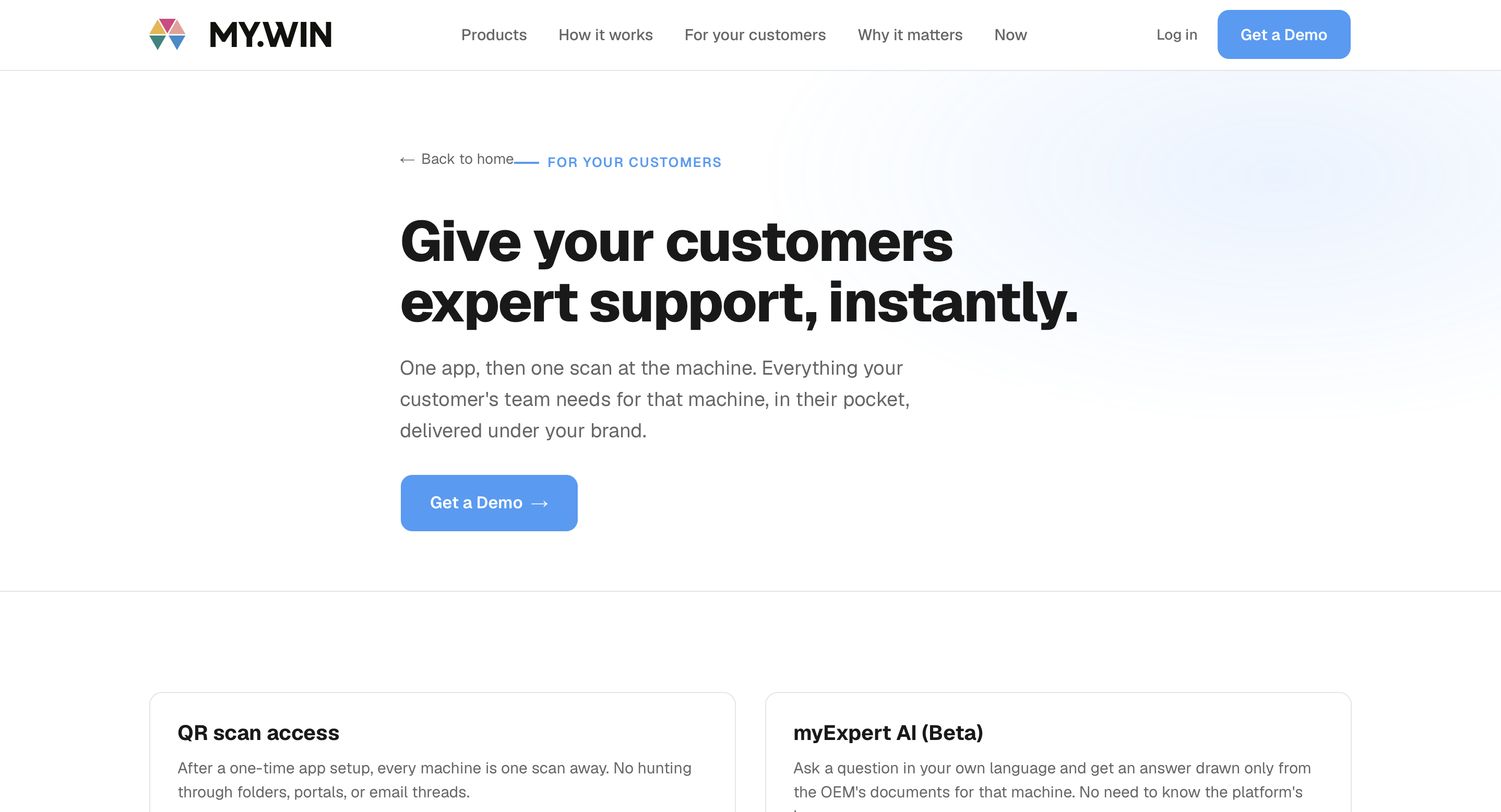
A dedicated page presents the food-manufacturer experience as what the equipment manufacturer offers their customers — the same platform, told from the other side, without diluting the buyer's homepage.

My.Win 'For your customers' page — the platform told from the food-manufacturer side

The platform, framed as a value-add for the buyer's customers

Product & Demo

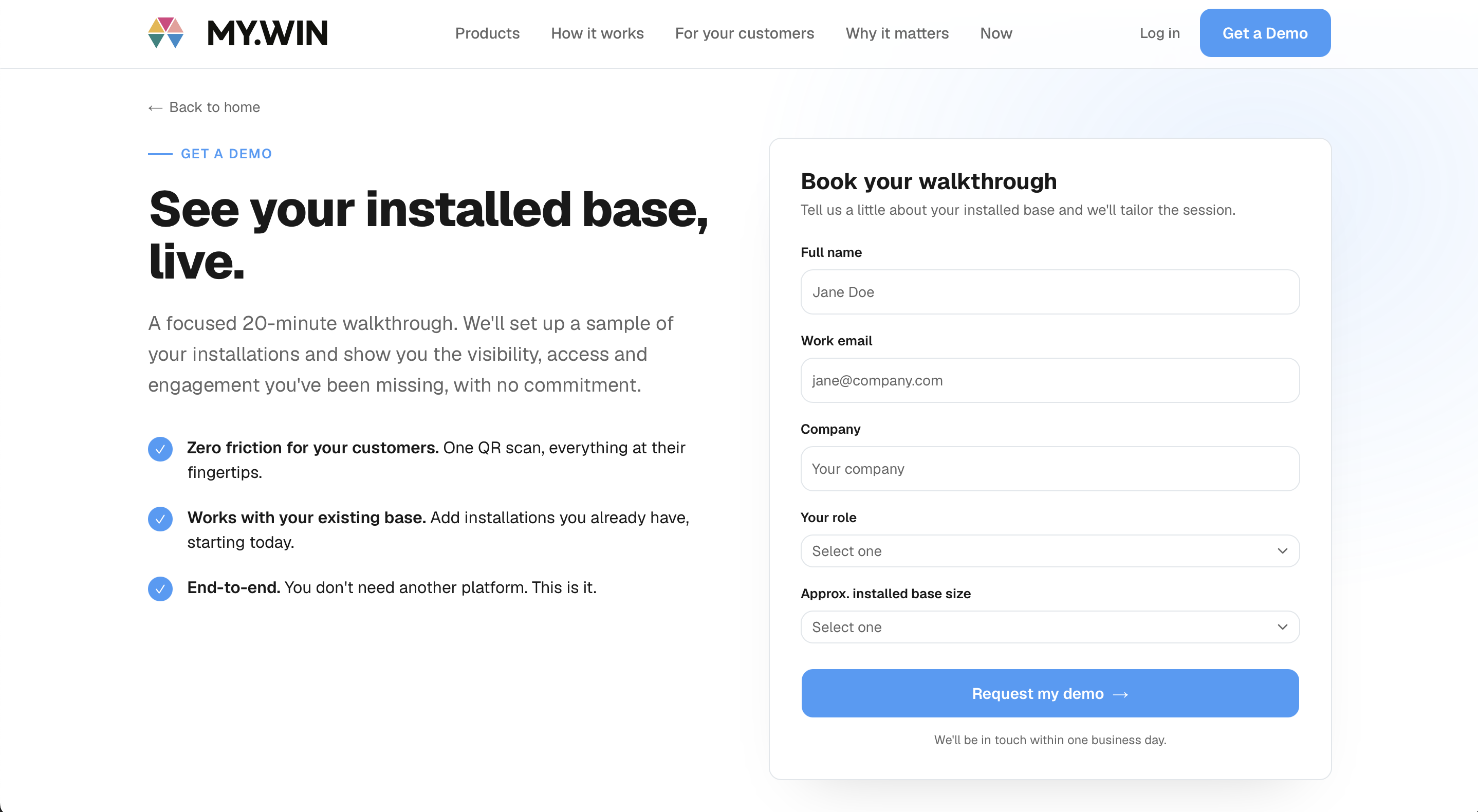
Module pages explain each capability in plain terms, and every path leads to a single demo request — the one endpoint the whole site is built to reach.

My.Win product module page with the demo request form — every path converging on one action

Product pages converging on one action — request a demo


Good positioning is about sharpening, not softening. The clearer you are about who you're talking to, the more every other decision makes itself.

1 Less Design